As one year has passed since the Los Angeles Unified School District’s (LAUSD) district-wide phone ban, we’ve been fortunate to continue reporting, despite the limitations on our phone use in producing accurate and timely content.
Last year, the district-wide phone went into effect on Feb. 18 with the purpose of combating phone addiction and improving mental health across the district. The ban requires students to store any phones, earbuds and smartwatches away for the entire school day. The district allowed each school’s Local School Site Council (LSSC), the primary decision-maker for all schools, to decide how they would store their phones. The decision was for students to store their phones in Yondr pouches, which are magnetic phone pouches.
When we heard that the district wouldn’t offer exceptions for student journalists, we became concerned about how this would affect our workflow when reporting. As student journalists, we significantly rely on accessible technology during our reporting process. Having access to technology to record interviews for our articles and podcast episodes and to communicate with staff members throughout the day is vital to our publication’s success.
Last year, our school’s LSSC voted to permit student journalists on campus to use our phones during the reporting process. In addition, our adviser was given a magnet for us to unlock our phones in her classroom. We were beyond grateful for this exception, as it meant our work wasn’t as impacted as we initially thought.
However, as the year progressed, we still faced difficulty accessing our cellphones for reporting purposes. Last December, our Yondr magnet was stolen from our adviser’s classroom, which resulted in us not being able to unlock our phones for reporting. Despite this incident, it led us to seek other methods and resources to utilize while reporting.
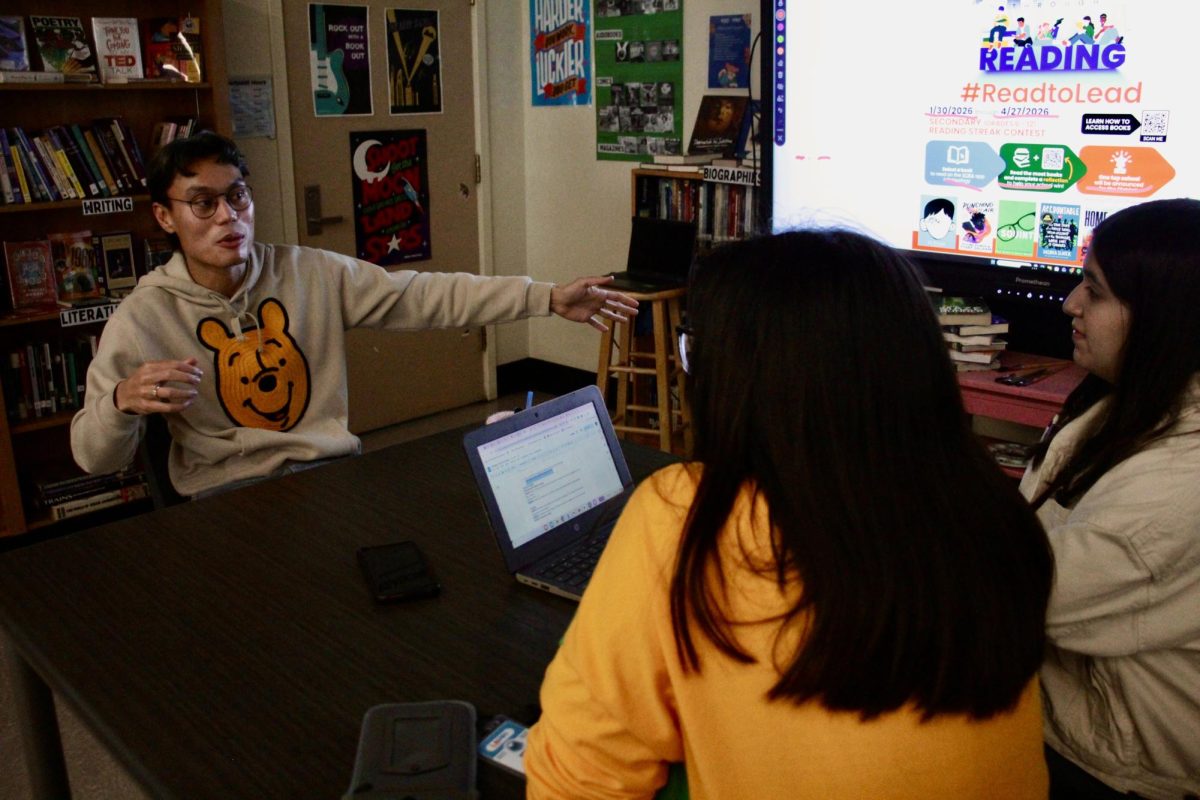
Throughout this past year, especially during this year’s Scholastic Journalism Week, whose theme is “Press Under Pressure,” we’ve learned to appreciate our resources more throughout the production process. Whether it be our increased usage of our computers or our attempt to return to pen and paper while conducting interviews, we’re dedicated to continuing to report despite the phone ban.
Additionally, we plan to use other resources to improve our reporting. For our student-led podcast, Room 22, we want to begin utilizing microphones to enhance our sound quality without having to use our cellphones.
Despite the limited access to our phones, which has caused challenges during reporting as student journalists, we still utilize any resources available to us. Even under the pressure of the district-wide phone ban, it is our priority to continue reporting to inform our community with timely, accurate information, whether it be by using technology such as our phones or more traditional methods such as pen and paper.