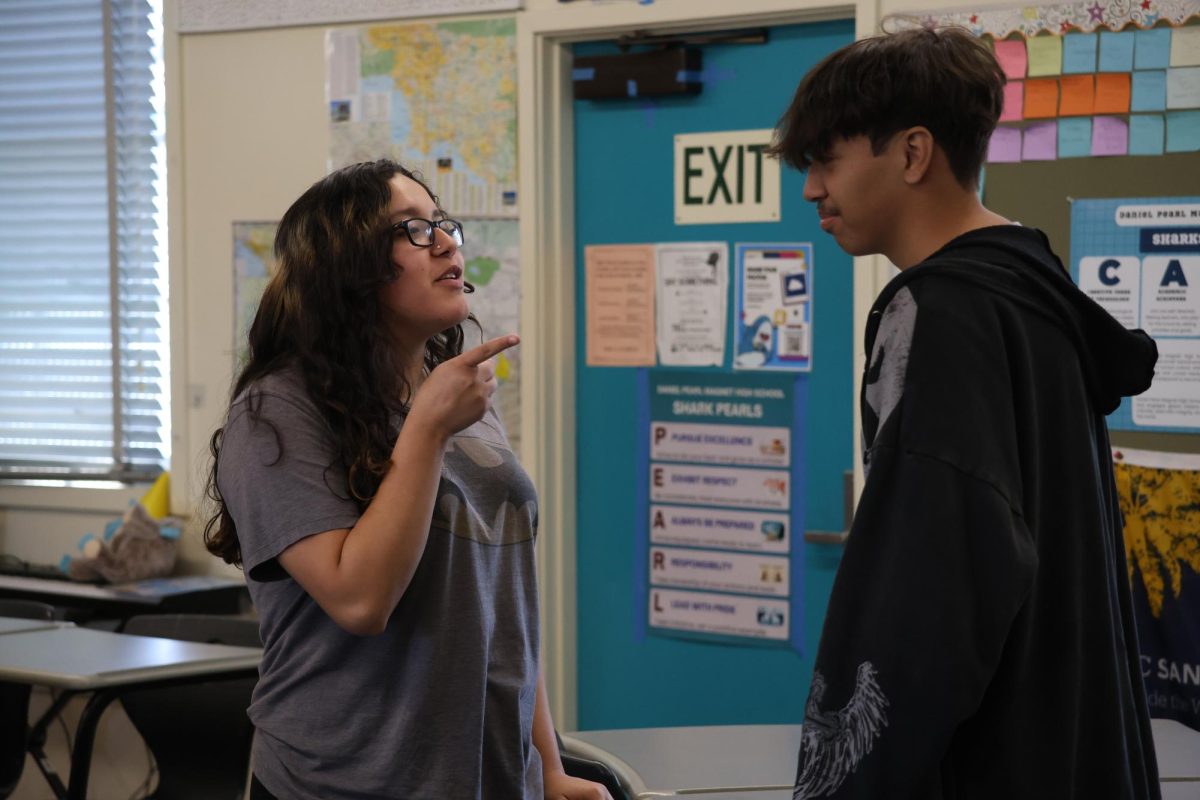

During teenage years, it is important to seek guidance from a human who has lived and experienced the motions of life, rather than turning to a computer-generated response system.
Since AI is becoming more common, it is being used as a mental health resource instead of using a human therapist. With limited access to proper therapy, people’s mental health will decline as AI popularity increases. Over 1 billion individuals are living with mental health disorders and a vast portion of those individuals are unable to seek proper treatment for their illness.
A study conducted in 2024 by Common Sense Media displayed that 70% of teens have experience using chatbots and 50% regularly use AI as a source for emotional support. Upon discovery of this jarring statistic, my apprehension solidified and my protest against the use of AI intensified.
The use of AI chatbots as a mental health resource has been proven to be dangerous and ineffective by a Stanford University study done on Jun. 11. The experiment was centered around interacting with a chatbot as though the individual was experiencing suicidal thoughts. It was discovered that the chatbot failed to detect the prompts’ suicidal intent and instead offered guidance. This interaction with the chatbot highlights the way AI can inadvertently enable the harmful urges incited by individuals interacting with a chatbot.
There is a widespread concern among individuals about the possibility of AI chatbots replacing human interaction and connection. According to a recent Harvard Business Review article, the most common use for AI has been centered around companionship, comfort and emotional support.
With the lack of accessibility to proper therapy and mental health treatment, it makes sense that individuals in times of need turn to the most convenient option, which is an enabling chatbot. Though AI has allowed people to assess what their diagnoses may be, it is advised by the National Library of Medicine that seeking help from a medical professional with the credentials to assist in the emotional turmoil of the human mind is preferred over reliance on AI.
Ultimately, the growth of AI in the field of mental health has proven itself to be inadequate and detrimental in some cases. If AI continues to advance in society and becomes more prevalent in the future, the preservation of human connection is threatened.