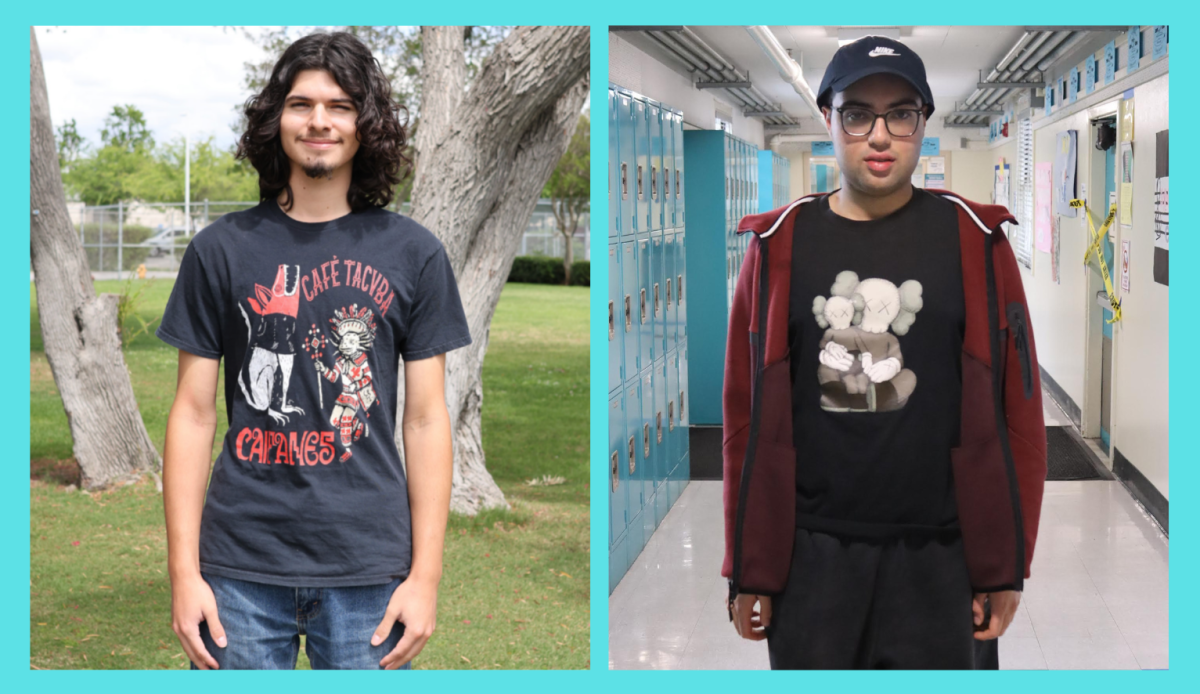

Freshman Niya Bowers worries for the safety of students in Los Angeles schools in light of the ever-growing presence of Immigration and Customs Enforcement (ICE) raids sweeping across Southern California since spring.
“It’s just not good to be scared to go someplace where we should be able to feel comfortable and have a safe space,” Bowers said. “But with ICE raids coming around, it’s unexpected at any time. Someone could come out of a white van and snatch people up just like that.”
On Sept. 8, the Supreme Court overturned an order that had previously prevented federal agents from racially profiling people based on their skin color, accent and other ethnic defining features to detain them in Los Angeles. Many critics, including the Mexican American Legal Defense and Educational Fund (MALDEF) believe the decision is unconstitutional due to the Fourth Amendment, which states that government agents must have reasonable legal suspicion to detain people and cannot detain anybody without probable cause.
“While (Justice Brett Kavanaugh) makes clear that excessive force is cause for concern, he asserts that enforcement of that specific constitutional prohibition will somehow prevent it,” MALDEF said in a news release. “That is ludicrous; today’s decision will catalyze activity that will lead to widespread violations of clear constitutional rights, including the ban on undue force.”
Los Angeles Unified School District (LAUSD) students have been deported, including incoming senior Nory Ramos on July 4. Ramos and her mother, Estela, appeared at a check-in with immigration officials when ICE detained them and took them to Texas to be deported to Guatemala on June 30. According to Ramos, a family member involved in a gang once threatened and hospitalized her mother in Guatemala. Estela Ramos was declared dead on Sept. 8.
“I was scared because there’s gangsters here, and they tried to kill my mom,” Ramos said in an interview with The 19th News. “My mom was scared.”
While walking his dog in the morning, LAUSD and Reseda High School student Benjamin Guerrero-Cruz was arrested by 15 immigration agents in Van Nuys on Aug. 8. When talking to a teacher who visited him in jail, Guerrero-Cruz recalled the masked men bragging that they would receive a reward of $1,500 for arresting him. Only 18 years old, he shared a cell with five to six men without access to a shower or a toothbrush for five days after his arrest.
Ericka Curran, professor of Professional Skills and Director at the University of Dayton, Ohio and former immigration lawyer, primarily focuses on representing immigrant children and immigrant survivors of violent crime. She has served on the Board of Directors of the American Immigration Lawyers Association Central Florida Chapter as well as the Executive Committee for the North East Florida Human Trafficking Coalition.
“I think it’s very shocking to be in a detention facility with people, you know, 18-80 plus years old when you’re that young,” Curran said during a Zoom interview. “Immigration detention is federalized, so individuals can be moved in the detention system; can be moved anywhere in the United States. That is something that is really challenging for families because you can very quickly find yourself many, many states away.”
The government ICE website offers a locator for detainees in custody. Any detainee over the age of 18 can be searched online by “A-Number,” country of birth, name and date of birth.
LAUSD officials have spoken out against ICE activity around schools, prompted by the detainment of a 15-year-old boy with disabilities outside the campus of Arleta High School. Agents released the student after family members intervened, announcing that it was a case of mistaken identity. The district also “reaffirmed its position regarding immigration reform,” identifying all of its campuses as protected areas on Feb. 24. In these safe areas, personnel are to avoid disclosing any sensitive information that could possibly reveal any details of a student’s or family’s citizenship status.
“Nothing can shake our commitment to our immigrant communities for I was once a newcomer, too,” LAUSD Superintendent Alberto M. Carvalho said in a press release on June 17. “We will continue to stand alongside our students and their families during this pivotal moment because it is simply the right thing to do. We are actively monitoring students affected by recent immigration enforcement activity and connecting them with support through our community partners. Together, we remain focused on building a community grounded in dignity, equity, and justice for all.”
On June 8, National Guard troops began taking positions in downtown Los Angeles after President Donald Trump authorized the deployment of 2,000 troops into the city to address the two days of protesting beforehand. This was the first time any president had mobilized the National Guard without the consent of the state’s governor since President Lyndon B. Johnson sent troops to Alabama to protect civil rights activists. The following day, 700 Marines were activated as well.
When students across Los Angeles protested the Trump administration’s immigration policies during Trump’s first year in office in 2017 and once again during his second term this last February, they stood for “justice, freedom and equality.” Now, some students are afraid that LAUSD does not currently protect students from ICE raids enough.
“I know they’re trying to protect us in our school,” junior Marina Nelson said. “But (ICE officers) have gone into churches and other schools too, so it doesn’t always feel safe.”
Numerous celebrations of Hispanic Heritage Month across the country have been cancelled due to fear of ICE raids. One celebration, the El Grito festival in Chicago, was postponed because of Trump’s crackdown on immigration in the city.
“It was a painful decision, but holding El Grito Chicago at this time puts the safety of our community at stake – and that’s a risk we are unwilling to take,” said the organizers of the festival in a CBS News article published on Sept. 15.
The River Festival, a celebration held in Everett every year for over two decades, was cancelled due to recent ICE raids in the area.
“We know how much this event means to our city. It is a celebration of culture, music, food, and togetherness. However, with the recent ICE raids in our region, many of our friends and neighbors are feeling fear and uncertainty,” Mayor Carlo DeMaría said in an El Pais article published Sept. 18.
According to a New York Times article by Tyler Pager, “In bypassing the authority of Gov. Gavin Newsom of California, a Democrat, to call in the National Guard to quell protests in the Los Angeles area over his administration’s efforts to deport more migrants, Mr. Trump is now pushing the boundaries of presidential authority and stoking criticism that he is inflaming the situation for political gain.”
Anybody, whether or not they are criminals, immigrants or legally residing in the U.S., are at some risk of being deported, according to an analysis by the Immigration Research Initiative. According to the article, “Every time ICE arrests increase, there is a decline in the percentage of immigrants arrested who are reported as criminals.” NPR says that about half of people in detention centers don’t have any criminal convictions—approximately 30,000 innocent people that have been detained by ICE.
“I heard that there were also some residents or US citizens that were kicked out even though they were from here,” said a senior who requested anonymity due to their undocumented status. “So I don’t know if they’re just going by how you look or if they’re just trying to enforce the law.”
It is unclear how many people know others that have been deported, but many students have connections to at least one family member or friend that has been deported. According to an article by the National Institute of Health, “Adolescents who have had a family member detained or deported within the past year demonstrate higher odds of suicidal ideation, alcohol use, and clinical externalising behaviours.”
“Family friends have been deported,” sophomore Brandon Gamez said. “Personally, since I’m religious, I pray to God. But, I just try to keep going and fight for change. I feel like if I really put my voice out there, I could be heard and make a change.”
In addition, having a close friend or family member be deported has been associated with “adverse mental health outcomes.”
“It can be extremely traumatizing to experience this; I mean, I think even the fear right now is causing trauma,” attorney Curran said.
In addition to creating emergency plans for immigration raids near campuses, LAUSD is supported by United Teachers Los Angeles (UTLA) in affirming that campuses are “sanctuaries” and “safe zones.” Flyers that explain the laws around how schools protect students are handed out before school begins.
“Schools should also, in my opinion, carry a list of referrals and resources for students. There’s a possibility of having attorneys come do presentations for students and families or just providing the resources in terms of what their rights are,” Curran said.
In the event that anybody is approached by ICE officers, Curran states that you always have the right to remain silent. However, she recommends preparation and planning ahead of time.
“I recommend that anybody, particularly somebody who is undocumented or in process of documentation, that you have, if you can, a consultation with a lawyer about your potential options,” Curran said. “Do you have documents to facilitate going back to another country? Do you have plans for different members of family? Many people who are low income may qualify for free legal services through legal aid organizations.”
Students reaffirm that security is important to keeping everyone safe.
“Keep the gates locked,” Bowers said. “I would just feel safer if the gates are kept locked so I’m not worried that when I pull up to school or leave school that ICE is going to come and get me.”